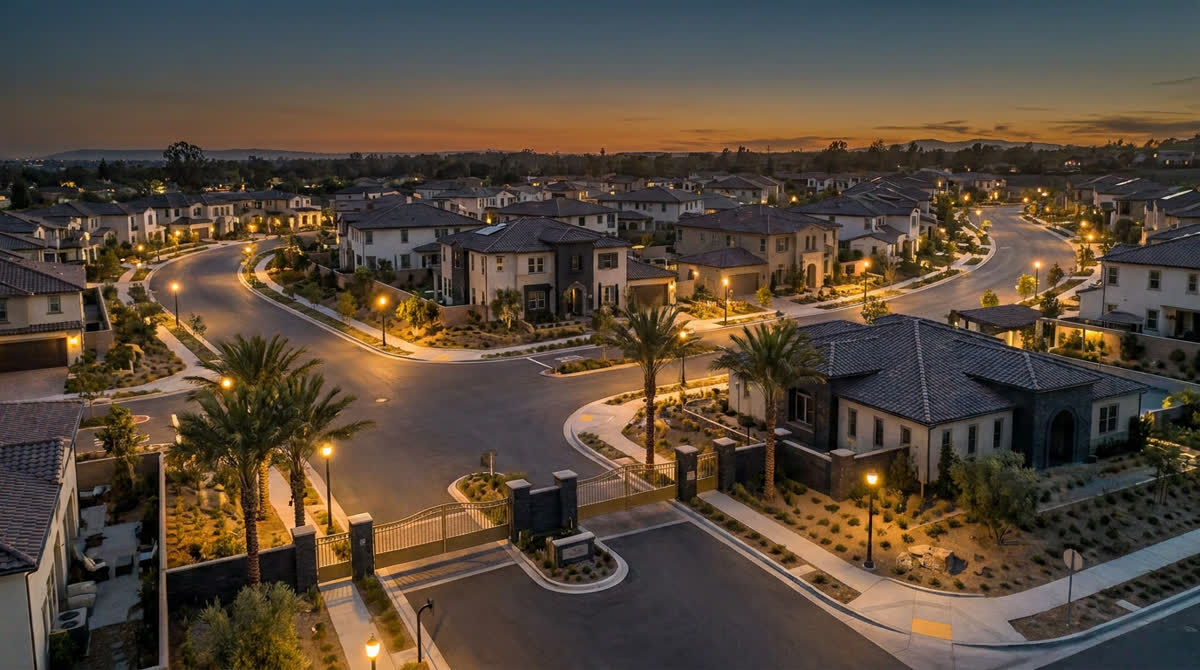
Mello-Roos surprises a lot of buyers. This infographic shows exactly how a CFD special assessment stacks on top of your base 1% property tax.
What this shows
Every California home pays a base property tax of about 1% of assessed value (plus small voter-approved add-ons). In newer master-planned tracts, a Mello-Roos Community Facilities District (CFD) levies a separate special assessment on top of that base to repay bonds for streets, schools, parks, and infrastructure.
The key idea the chart makes visible: Mello-Roos does not replace your base tax — it stacks on top of it. Two identical homes can have very different total tax bills depending on whether one sits inside a CFD. That difference directly affects your monthly payment and how much home you can afford.
Why it matters block by block
Mello-Roos is parcel-specific. A home in Moorpark, Camarillo, or Porter Ranch may carry a meaningful CFD assessment while a neighboring older tract has none. Always check the special assessment before you fall in love with a payment estimate.
Sources & methodology
The structure shown — a base ~1% ad valorem tax with a Mello-Roos CFD special assessment stacked on top — reflects how California property taxes and Community Facilities Districts work as of 2026. Bar heights are illustrative and do not represent any specific parcel’s rate. CFD amounts vary widely by tract and can change; verify the exact assessment on the tax bill or with the county before relying on it.
Frequently Asked Questions
Does Mello-Roos replace my regular property tax?
No. Mello-Roos is a separate Community Facilities District (CFD) special assessment stacked on top of the base ~1% ad valorem property tax. You pay both, which raises your effective rate.
Which areas commonly have Mello-Roos?
Newer master-planned tracts often carry Mello-Roos. Locally, you’ll see it in parts of Moorpark, Camarillo, and Porter Ranch. It is parcel-specific, so a neighboring older tract may have none.
How do I find out the exact Mello-Roos amount?
Mello-Roos varies by tract and can change over time. Check the property tax bill or confirm with the county for the specific parcel before relying on any payment estimate. Brian can pull this for any home you’re considering.
